Executive Summary
- Where Key Risks Lie: Up to 80% of corporate non-financial risks—ranging from environmental impacts and working conditions to regulatory compliance—originate in the supply chain.
- Traditional Limitations: Data collection via blanket questionnaires suffers from low response rates and creates a heavy administrative burden for both procurement and ESG teams.
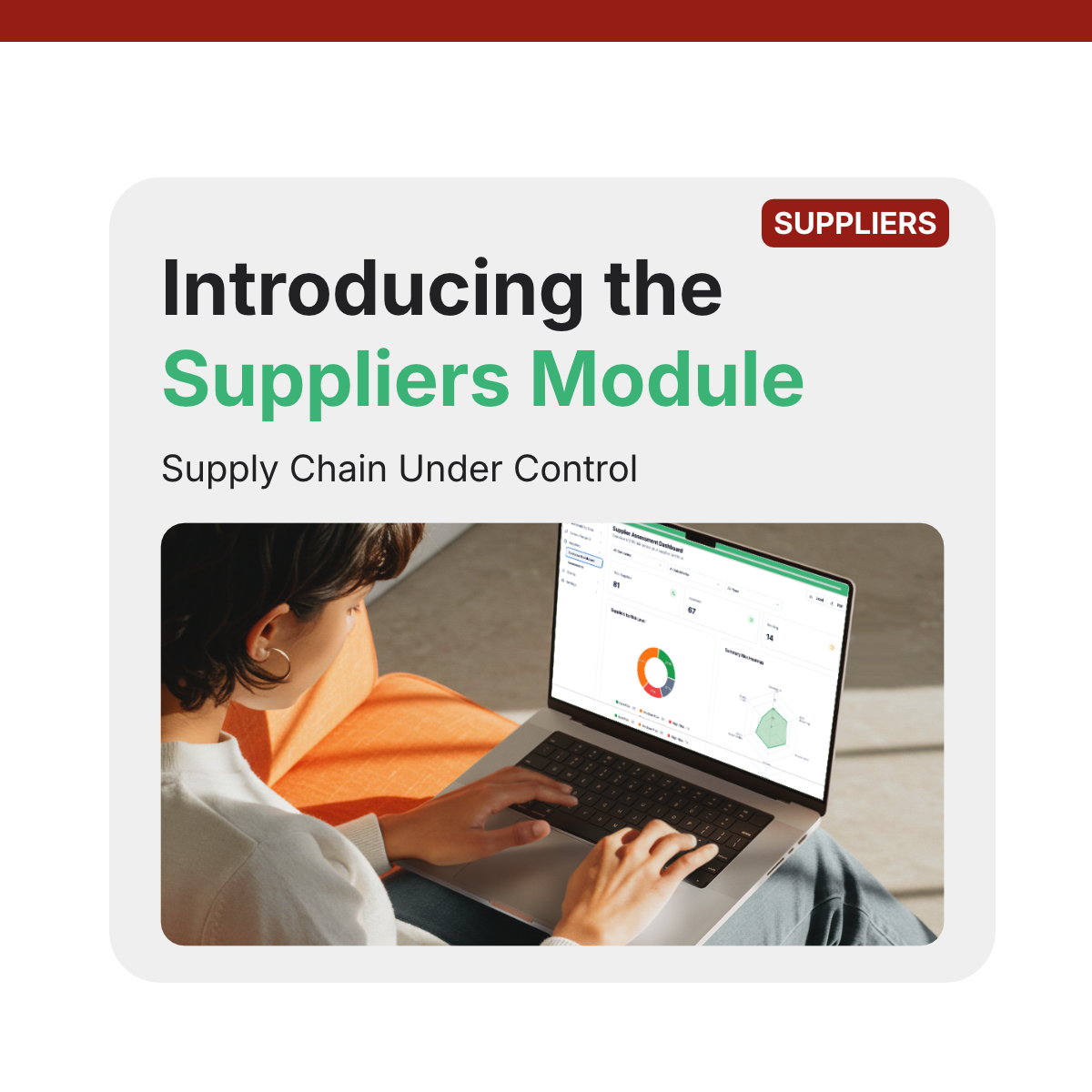
- New Solution: The Suppliers module in Flagship Platform automatically evaluates supplier ESG risks from public data and registries using AI. Furthermore, it can process internal documents you upload (e.g., an unpublished ESG report) and instantly refine the overall assessment based on them.
- Practical Benefits: Procurement and ESG teams gain instant risk assessments and clear dashboards. In collaboration with our consultants, they can then easily define specific follow-up actions for procurement operations.
Why Is Supplier Assessment So Complex in Practice?
While companies have full control over data from their own operations—such as energy or material consumption—the supply chain often remains a less transparent area filled with unknowns. Yet, this is precisely where a significant portion of impacts and potential risks originates.
In our work with large enterprise clients managing extensive supplier portfolios, we repeatedly encounter three major obstacles in practice:
- Low Response Rate and Turnaround Time: Suppliers are overwhelmed by questionnaires from multiple buyers. Obtaining responses can take months.
- Unverifiable Data: Questionnaire responses often do not accurately reflect actual conditions and require laborious manual validation.
- Lack of Integration with Procurement: Even when the ESG team obtains data, procurement departments frequently lack clear guidance on how to leverage it during contract negotiations.
For these reasons, we transferred the methodology from our consulting practice directly into Flagship Platform and expanded it with the new Suppliers module.
How to Evaluate ESG Risks Across Hundreds of Suppliers and What the New Suppliers Module Brings
The core value of the Suppliers module lies in its ability to retrieve and evaluate information entirely without burdening suppliers. Drawing on public data, websites, official registries, and AI screening, it categorizes your entire portfolio by risk level. Targeted follow-up questions or certificate requests are triggered only where data is missing or where the analysis reveals heightened risk exposure.
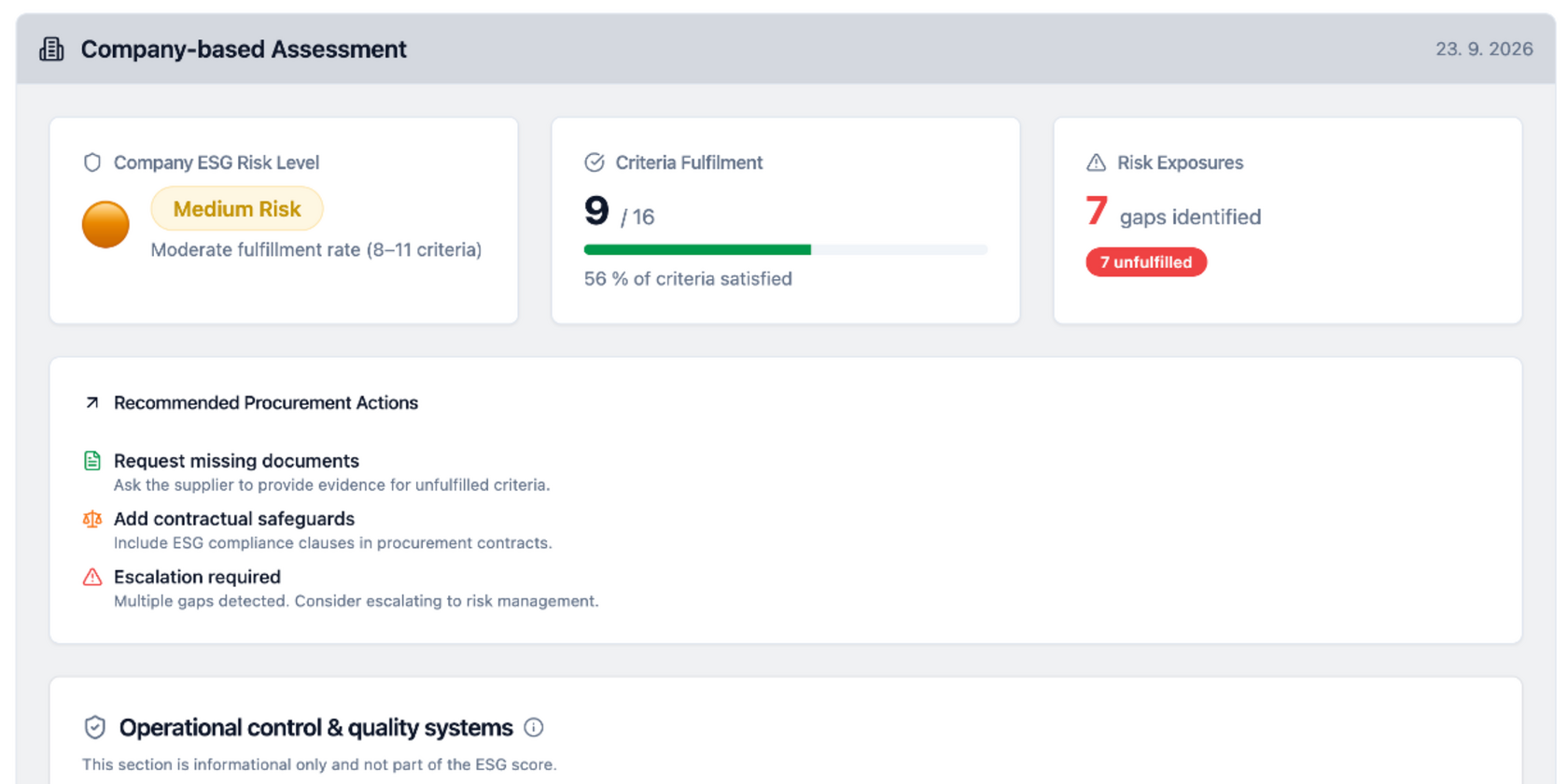
Based on the resulting risk score, you can work with our consultants to establish clear follow-up procedures for your procurement department—ranging from requesting a missing document to incorporating binding contractual clauses. Instead of dealing with administrative overhead and unnecessary paperwork, ESG and procurement teams can focus their attention exclusively on high-risk supply chain links where concrete action is required.
How Does the Suppliers Module Work?
We designed the methodology to enable the evaluation of risks across thousands of suppliers in just a few structured steps, eliminating unnecessary administrative burden.
Step 1: Uploading the Supplier Portfolio
Basic supplier identifiers (e.g., Company Registration ID or company name) are uploaded into the platform. This can handle anywhere from dozens to thousands of items in a single batch.
Step 2: Automated Screening Without Questionnaires
Advanced algorithms automatically mine available public sources, websites, official registries, and sustainability reports to generate a foundational profile for each supplier. You can complement this profile at any time with additional documentation (e.g., an unpublished supplier ESG report); the system will evaluate the uploaded files and automatically update and refine the profile.
Step 3: Risk Analysis Across All Pillars (360° View)
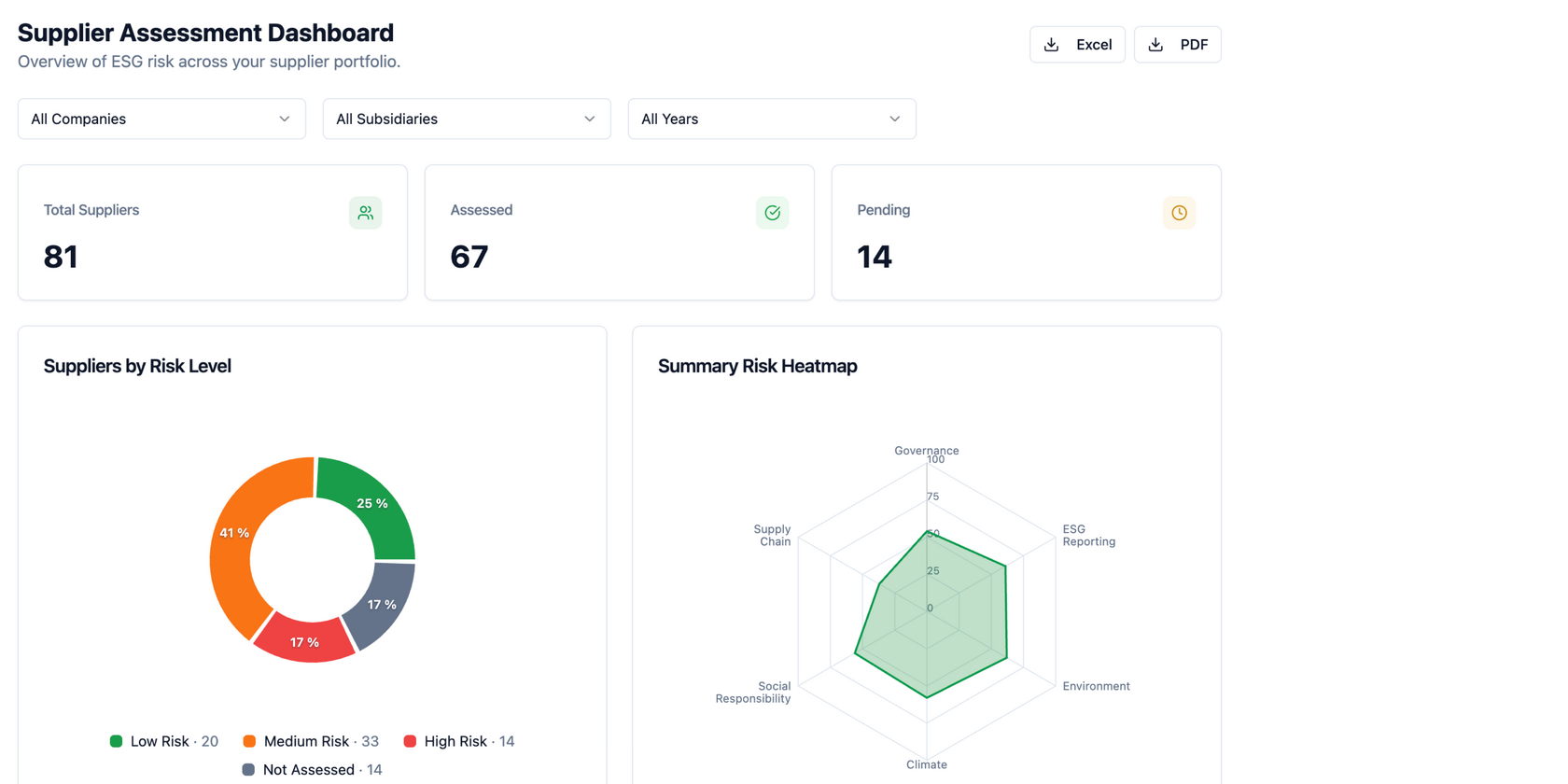
The resulting assessment categorizes suppliers into a clear risk matrix (heatmap):
- Environment: Waste management, certifications (ISO 14001), energy intensity.
- Social & Labor Rights: Occupational health and safety, labor law compliance, employee care.
- Governance & Ethics: Anti-corruption mechanisms, legislative compliance, structural transparency.
- Reporting & Transparency: The supplier's ability to provide non-financial data.
Step 4: Expert Review by Flagship Consultants
We supplement automated screening with our domain expertise. Flagship consultants verify the data and assist in establishing prioritization for key or high-risk suppliers.
Step 5: Actionable Instructions for Your Team
The platform delivers a clear data foundation and risk scores. Based on these insights, your team—working alongside our consultants—selects the appropriate response:
- Example A (Medium Risk / Missing Data): Request Missing Document — Requesting a specific missing certificate (e.g., ISO 45001).
- Example B (Human Rights & Working Conditions): Contractual Clause Adjustment — If risk exposure is identified (e.g., lack of safety guarantees or fair compensation terms), the system recommends inserting binding human rights compliance clauses into procurement contracts, including termination rights upon breach.
- Example C (High Risk): Escalation to Risk Management — Initiating a deep-dive audit or establishing a mandatory corrective action plan.
Frequently Asked Questions (FAQ)
Can the module be used for stricter regulatory requirements (e.g., CSDDD)?
Yes. The module is built on proven supply chain Due Diligence best practices. It helps reliably identify high-risk nodes within the supply chain and provides auditors and buyers with evidence that the company actively and systematically manages its risks.
Does this mean we can eliminate questionnaires entirely?
Instead of tedious surveying of hundreds of companies, you receive automated baseline evaluations. Questionnaires serve as a targeted supplement. If the system cannot locate sufficient public documentation for a specific supplier, you can easily add information manually or request a targeted questionnaire.
What data outputs does the module provide?
You receive both a high-level summary dashboard for your entire supplier portfolio and detailed individual supplier profile cards, as well as exportable summaries in PDF or Excel formats for audit and negotiation purposes.
How to Shift Supplier Management from Administration to Building Corporate Resilience
Active supplier screening is no longer just a compliance duty for the sustainability team. For procurement directors and executive leadership, it represents a critical strategic tool to prevent supply chain disruptions, fulfill regulatory mandates, and strengthen overall organizational resilience.
Need a Customized Supplier Screening Process for Your Business?
Software is only half the solution; knowing how to operationalize the results is key. Our senior consultants will help you design a complete supply chain risk assessment strategy, established prioritization frameworks, and aligned procurement workflows:
👉 Explore our supply chain sustainability services or schedule a non-binding consultation with our team.
We Invite You to an Expert Online Session:
👉 Flagship Session: Map your supply chain before regulators do (CSDDD Starts 2027)
In 60 minutes, we will share practical case studies from our consulting practice on how to establish supplier screening methodologies, approach risk prioritization, and effectively align ESG goals with procurement operations.
Registration is free.